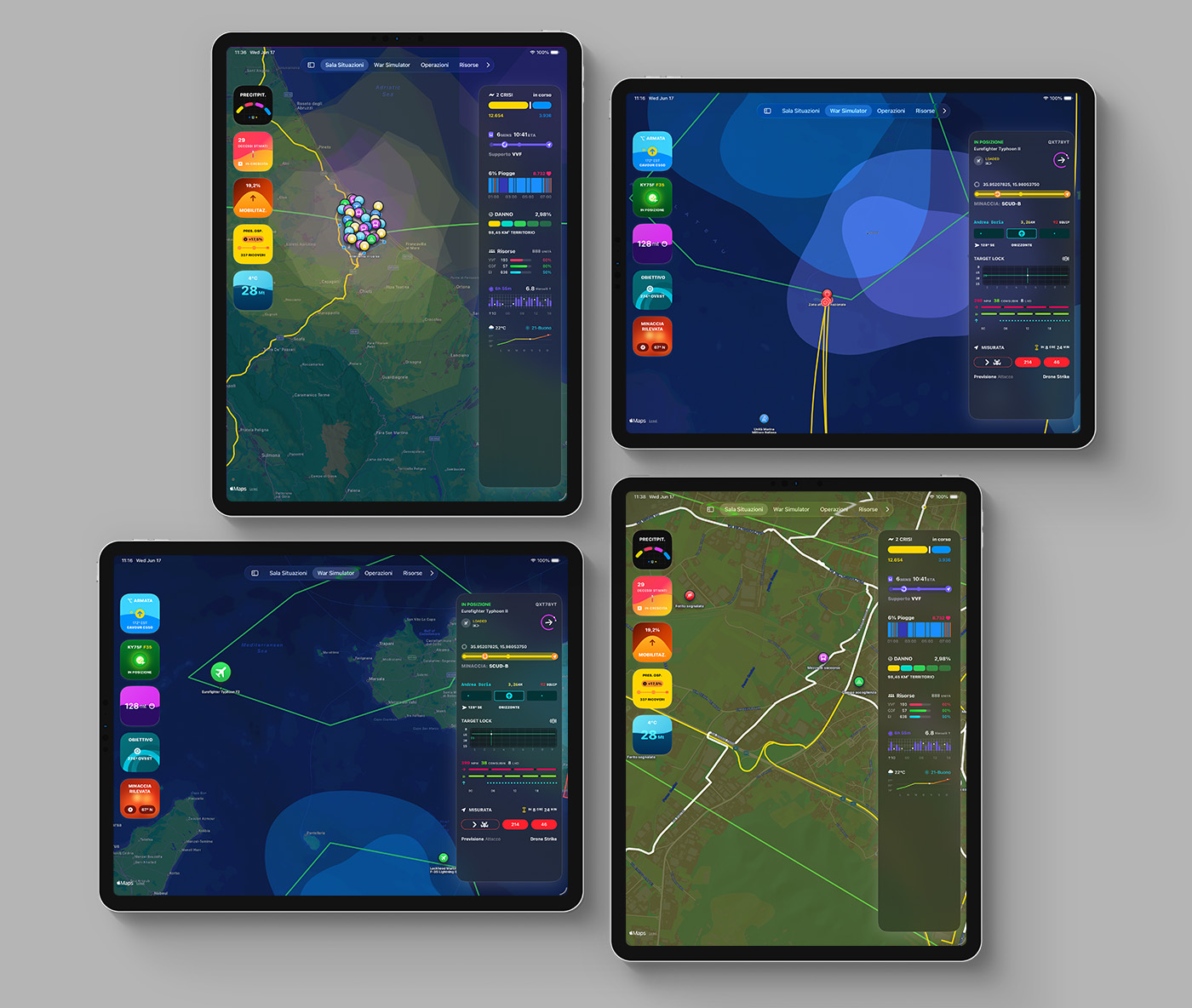
Core
Concept Designer & MVP Developer // AI-powered military command and crisis-response system
An intelligent operating system for emergency response and strategic decision making.
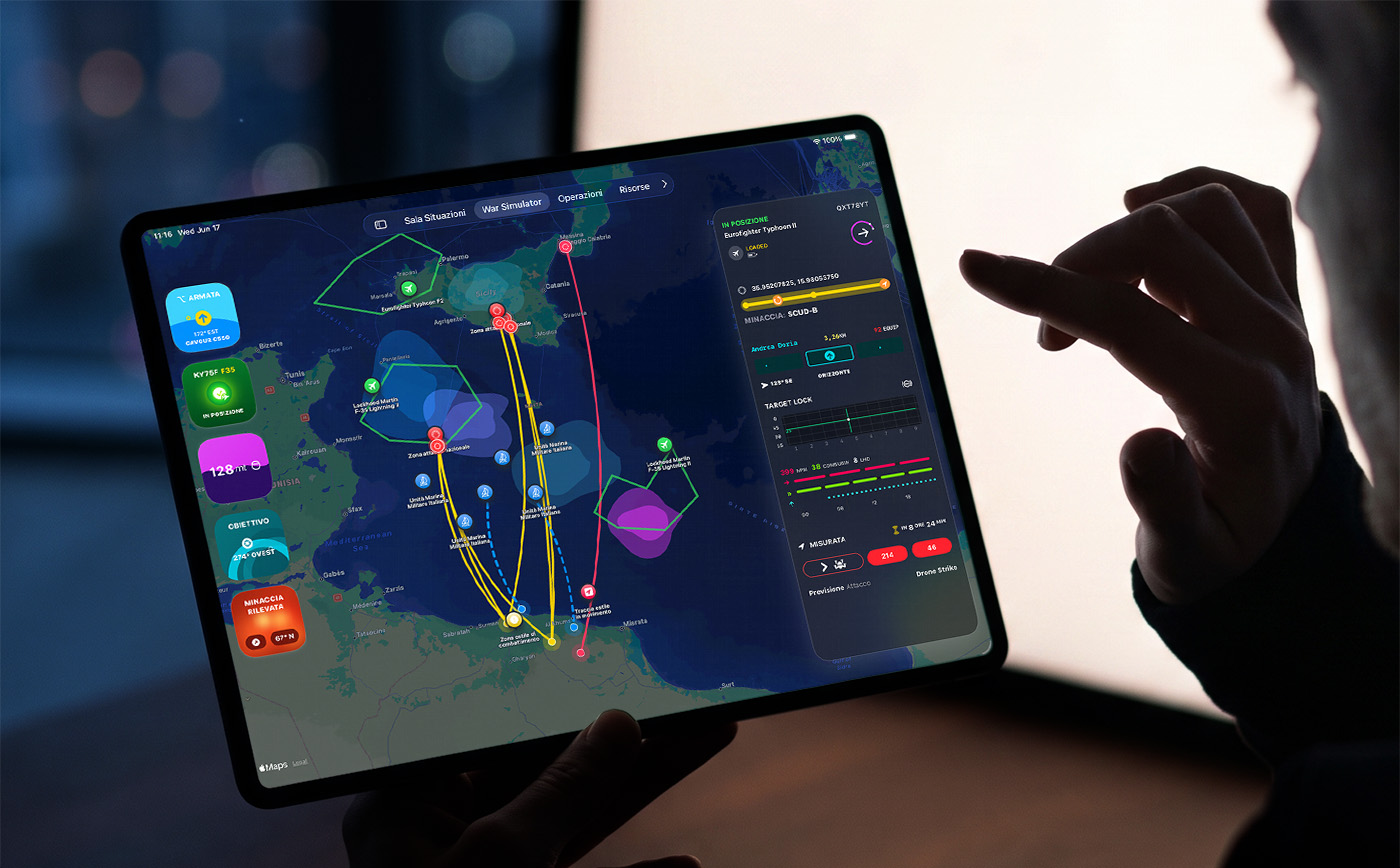
Core, short for "Centro Operativo Risposta Emergenze", is an advanced decision-support platform designed to help institutions, emergency operators, and strategic command centers manage complex crises with greater speed, clarity, and coordination.
The project was conceived as a central operational environment where territorial data, infrastructure intelligence, logistics, personnel availability, vehicles, weather conditions, and predictive analysis converge in a single actionable interface. Its purpose is not simply to display information, but to transform complex, fragmented data into operational awareness, strategic simulations, and concrete decision support.
Core responds to one of the most critical challenges in emergency management: information is often scattered across different systems, teams, and communication channels. During a crisis, that fragmentation slows decisions. Core brings these elements together, helping decision makers understand what is happening, where it is happening, which resources are available, and which actions should take priority.
The philosophy behind Core is simple: in an emergency, clarity is power. The platform is designed to reduce chaos, support faster decisions, and give institutions a shared operational picture during high-pressure situations.
Designing intelligence for pressure
Core is built around two main capabilities: crisis simulation and real-time monitoring. Simulation allows operators to model potential emergencies, estimate damage, identify vulnerable areas, calculate required resources, and compare alternative response strategies. Real-time monitoring provides a live view of an ongoing crisis, including affected areas, active vehicles, available personnel, infrastructure status, and evolving weather conditions.
The system uses a multilayer geographic model, moving from a strategic overview to national, regional, and local operational levels. This allows users to analyze emergencies at different scales, from a single critical infrastructure point to an entire region or national scenario.
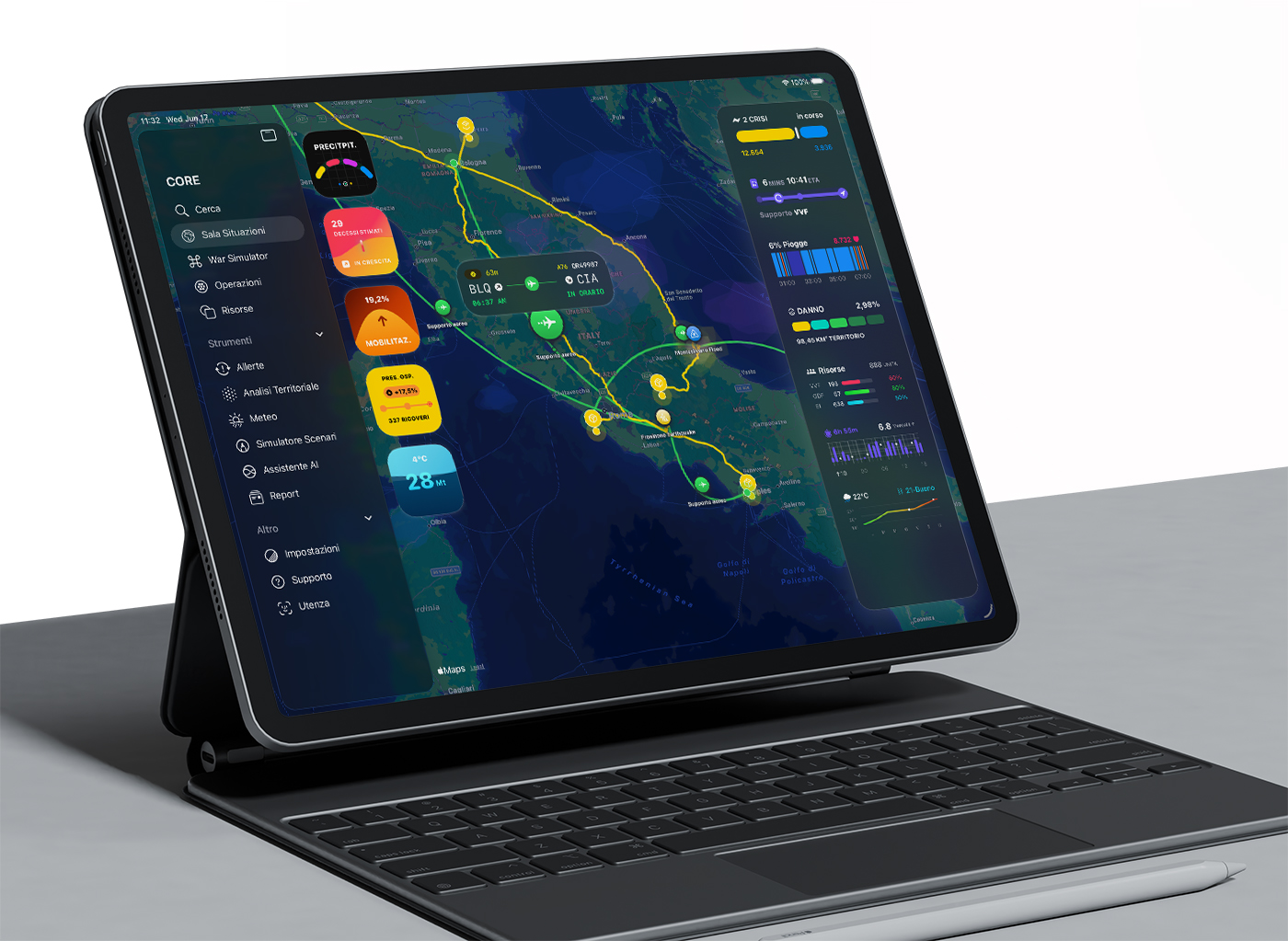
From a UI and UX perspective, Core is designed for people operating under stress. The interface must be clear, modular, and focused on situational awareness. Maps, alerts, resource panels, scenario cards, and AI-generated recommendations follow a strong visual hierarchy, where urgent information is immediately visible and secondary data remains accessible without creating confusion.
The AI component is designed to act as an assistant, not a replacement for human judgment. Core can suggest strategies, simulate scenarios, estimate resources, and highlight risks, but the final decision remains in human hands. The platform is meant to augment command, not automate it.
A platform built around coordination
Core also includes a multilayer authorization model. Different users, such as national coordinators, regional operators, field teams, and logistics managers, require different levels of access, visibility, and decision-making authority. Permissions can be based on hierarchy, territory, and function, allowing the system to adapt to real emergency protocols.
In civil emergencies, Core can support the management of floods, earthquakes, wildfires, large-scale accidents, and natural disasters. In strategic or military contexts, it can support theater analysis, resource monitoring, scenario simulation, and the assessment of possible hostile reactions.
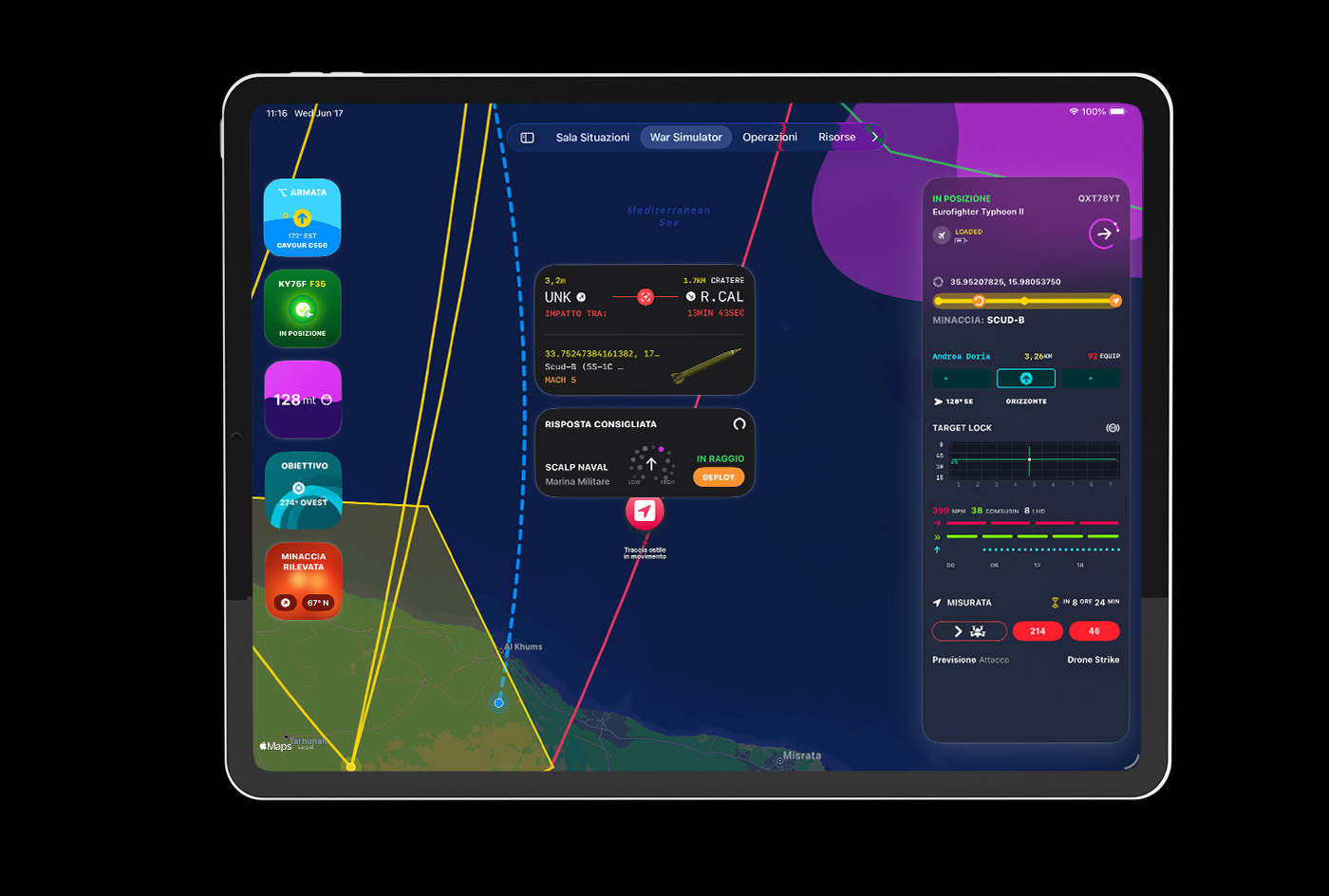
As a portfolio project, Core represents a high-complexity product concept focused on public safety, strategic intelligence, and mission-critical UX. It combines product vision, systems thinking, AI interaction, mapping, logistics, permissions, and operational workflows into one coherent platform.
From emergency response to operational intelligence
Ultimately, Core is a concept about preparedness. It is designed to help institutions understand risks before they become disasters and respond more effectively when a crisis is already underway.
Its ambition is to become a central operating layer for emergency management and strategic response, where maps, data, simulations, resources, and human decisions come together in a single environment.
Core is a command platform for the moments when clarity, coordination, and timing can change everything.