QGino
Product Designer & Manager // AI social media assistant
Redesigning the social intelligence workspace.
QGino is an AI powered platform developed by Not Just Analytics to help creators, marketers, and businesses manage their social media presence more effectively. It brings content planning, idea generation, publishing workflows, account management, and AI assistance together in a single workspace.
I joined the project as both Product Designer and Product Manager when QGino was already a live product with an established user base. Instead of starting from the interface, I began by studying how people used the platform, what they valued, and where the experience was creating friction.
My goal was not simply to redesign a set of screens. It was to rethink the entire product experience, preserving what users already found valuable while identifying opportunities to improve usability, clarity, and overall effectiveness.
Research before design
The redesign process began with user research. I designed and conducted surveys with active users to better understand their expectations, frustrations, and day to day workflows inside the platform.
After analyzing the results, clear patterns began to emerge. Some parts of the product were already delivering value, while others felt confusing, outdated, or unnecessarily complex. Those insights helped define the priorities for the redesign and guided every major product decision throughout the project.
Combining quantitative feedback with product analysis allowed me to identify the most critical pain points and establish a clear direction for the future of QGino.
Creating a scalable design system
Once the research phase was complete, I translated the findings into wireframes and user flows, working closely with the development team to ensure that each design decision remained practical, coherent, and technically achievable.
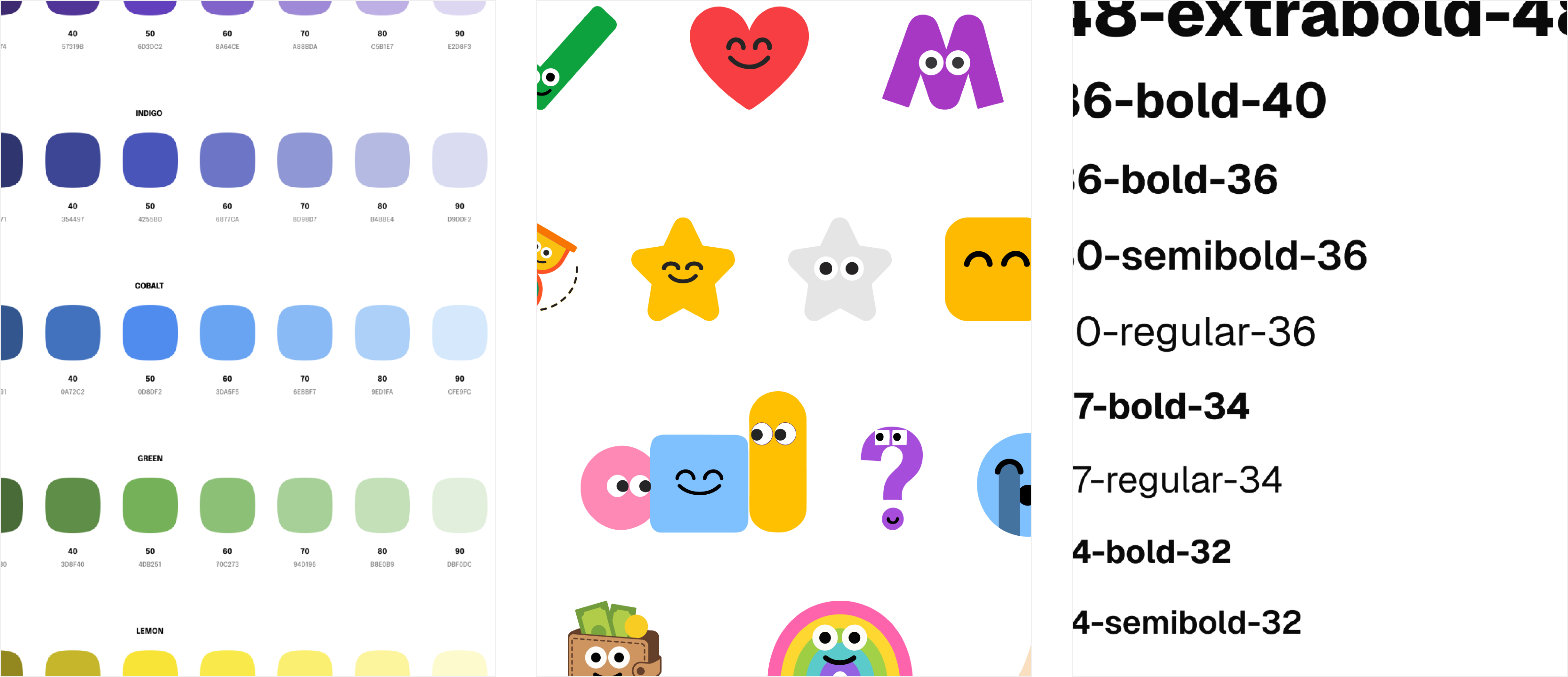
I designed a complete visual system for the platform, including typography, color foundations, reusable components, layouts, and interaction patterns. Every section of the application was reviewed and redesigned to create a more cohesive and intuitive experience.
One of the most demanding aspects of the project was managing the platform’s complexity. QGino contains a large amount of information, data, and functionality, which made information architecture and content organization central to the redesign.
Designing for every screen
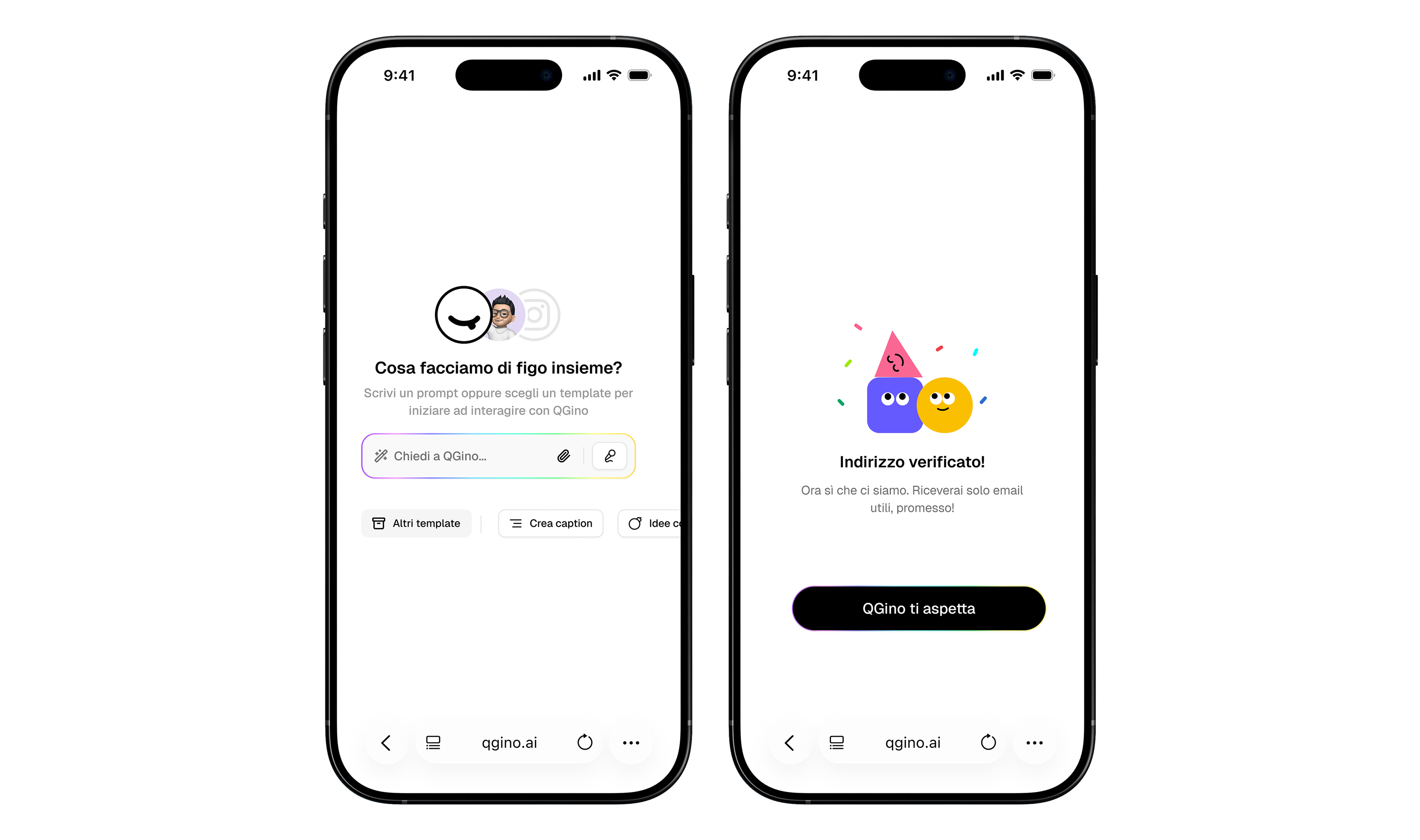
QGino needed to deliver a seamless experience across desktop, tablet, and mobile devices. This meant designing flexible, adaptive layouts capable of supporting complex workflows at any screen size.
Building a responsive experience for a feature rich platform introduced significant challenges. Every interface had to remain accessible, understandable, and efficient without sacrificing functionality.
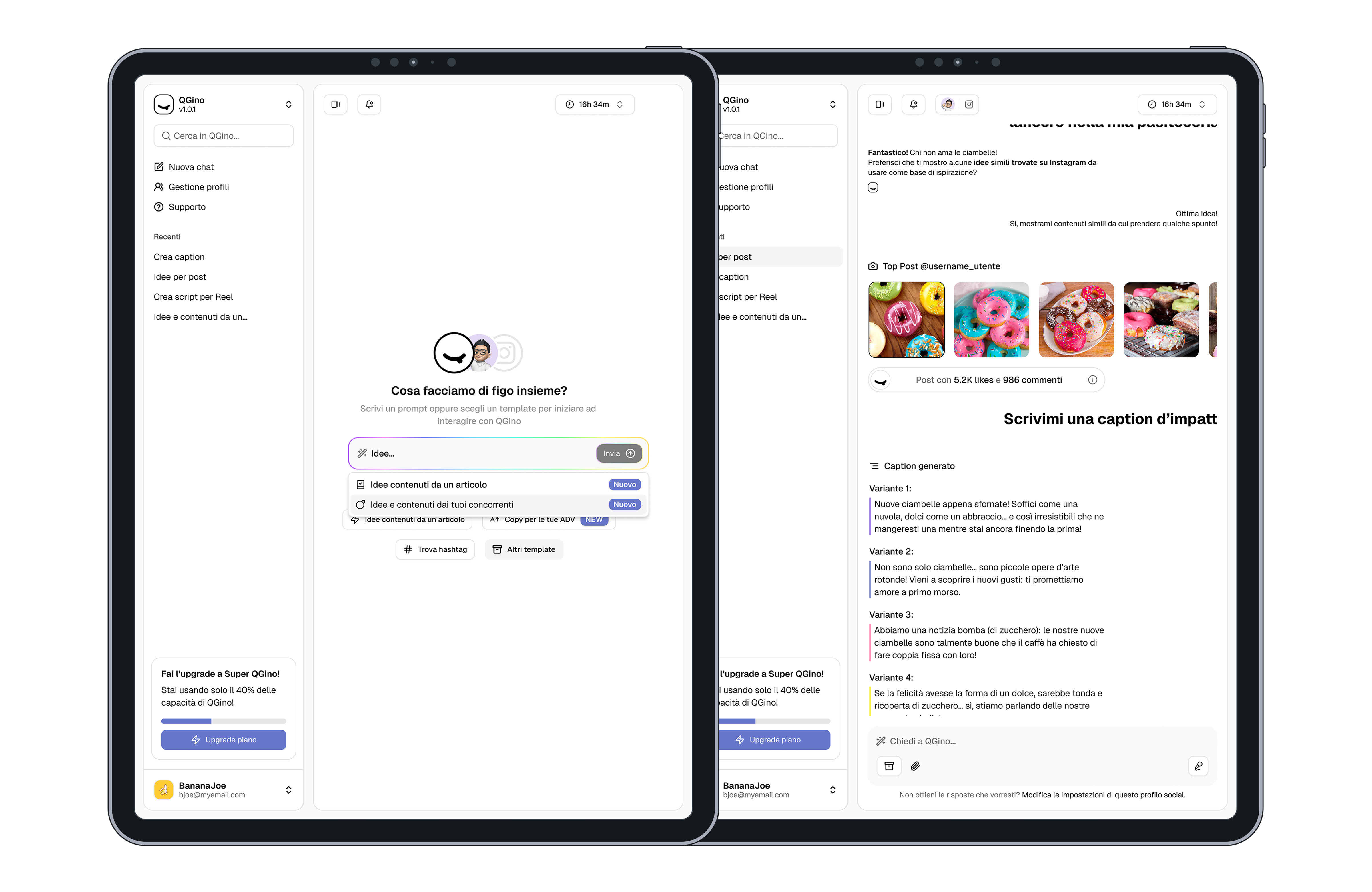
The result was a consistent cross platform experience that feels familiar across devices while taking advantage of the unique strengths of each format.
Reimagining the user journey
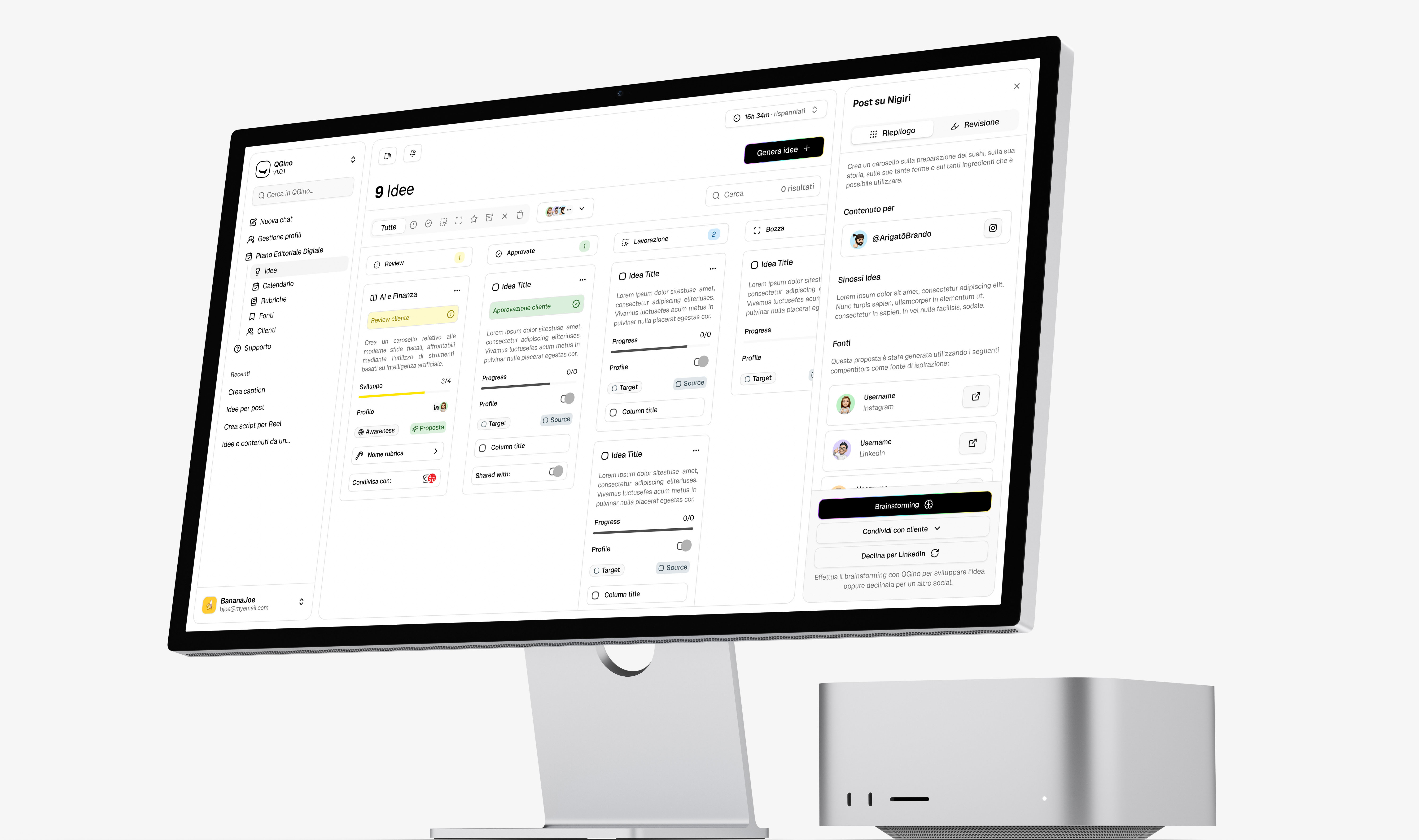
Beyond the visual redesign, a substantial part of the project focused on improving the broader product journey. QGino includes an editorial planning system that allows users to organize and schedule content through a calendar based workflow, helping teams manage publishing activities more efficiently.
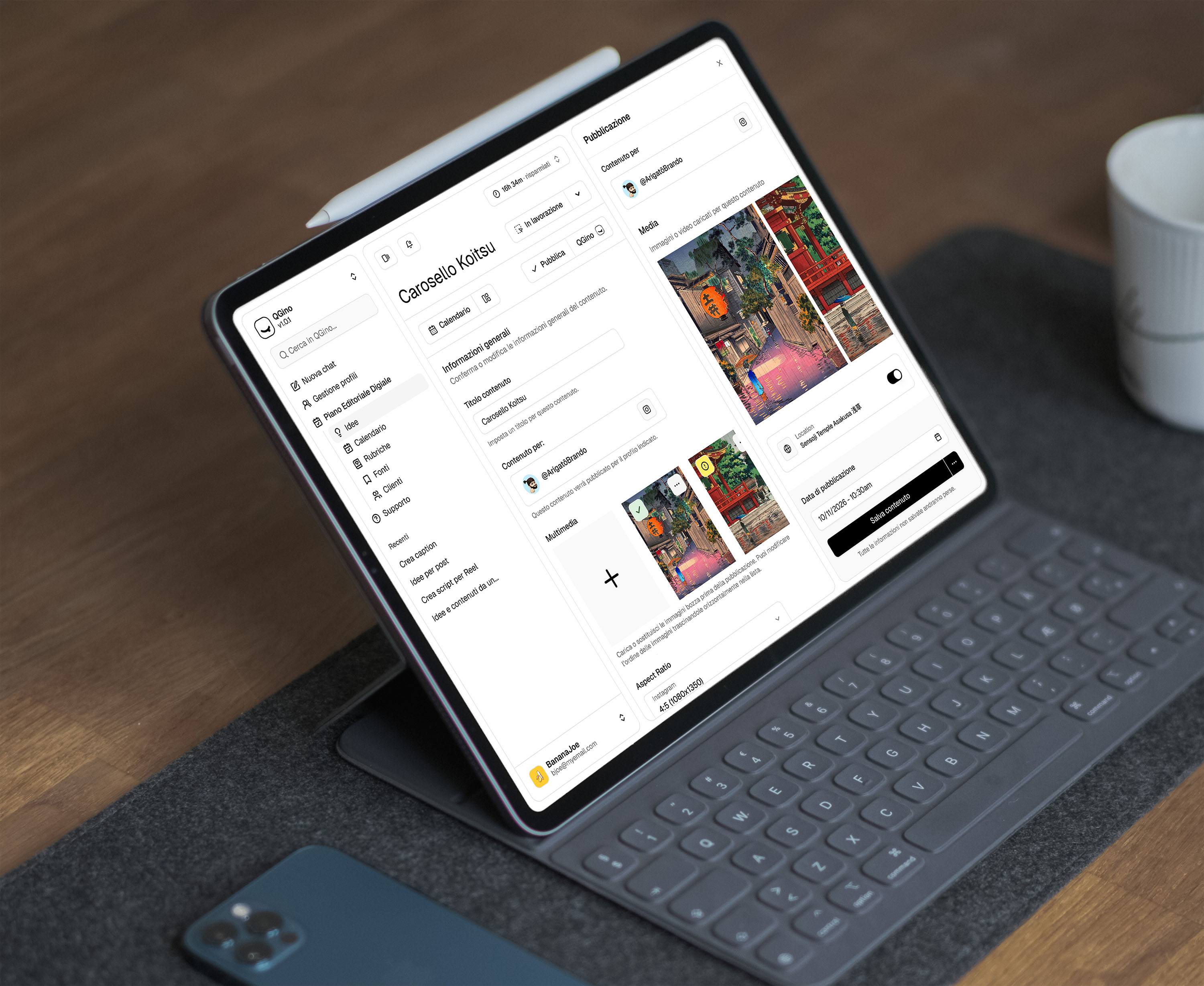
The platform also supports content discovery and ideation. Users can explore new publishing opportunities through AI assisted research, drawing inspiration from online sources as well as from custom references they choose to provide.
Additional areas of the redesign included onboarding, account and team management, subscription and pricing flows, content generation tools, and many supporting features that contribute to the broader product ecosystem.
The objective was not simply to modernize the interface, but to create a product that feels easier to understand, more enjoyable to use, and better equipped to support users throughout their content creation journey.
Redesigning QGino was a challenging and rewarding experience that required balancing user needs, business objectives, technical constraints, and long term product vision. The outcome is a more cohesive, scalable, and user centered platform built on research, collaboration, and thoughtful product design.